
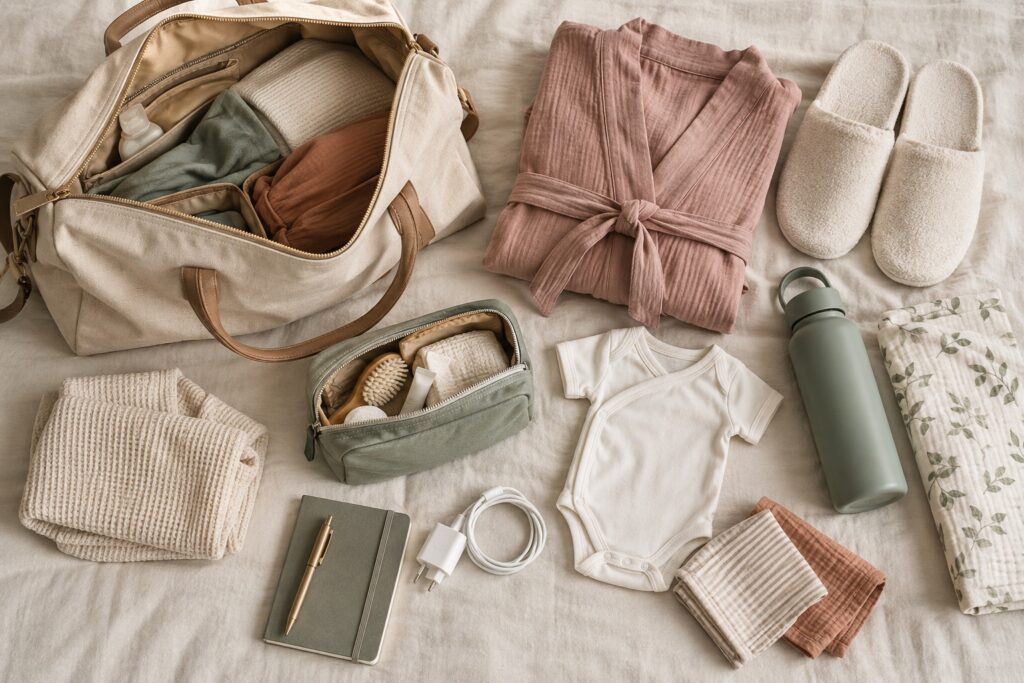
A hospital bag should reduce friction, not prepare you for every imaginable scenario. Confirm what your hospital or birth center provides, then pack a compact set of items for labor, recovery, baby, and your support person.
Documents and essentials
- Photo identification and insurance information
- Hospital registration details
- A short medication and allergy list
- Your birth preferences, if you have written them
- Phone, extra-long charging cable, and contact numbers
For labor and recovery
- Loose clothing or a robe you do not mind washing
- Non-slip socks or washable slides
- Hair ties, lip balm, glasses, and basic toiletries
- A comfortable going-home outfit with an easy waistband
- Nursing or feeding items you specifically want to use
Many facilities provide gowns, pads, disposable underwear, diapers, wipes, and feeding supplies, but offerings differ. Ask before packing large quantities.
For comfort
Consider a familiar pillow in a distinctive case, a small speaker or headphones, an eye mask, and a light blanket. Bring snacks only within your facility’s rules and your medical team’s guidance.
For baby
- An installed car seat appropriate for your baby
- One or two simple outfits in different sizes
- A weather-appropriate blanket for leaving
- Any pediatric paperwork the facility requested
For your support person
Pack a change of clothes, toiletries, medications, chargers, snacks, and a refillable water bottle. A support person who has covered basic needs can focus more fully on you.
What to leave home
Limit valuables, bulky décor, large amounts of cash, and anything difficult to clean. Leave space in the bag for paperwork and supplies you may receive.
Place the packed bag somewhere obvious, and show your support person where important items are. A short note inside the top can list last-minute additions such as phones, medications, and refrigerated snacks.