Pregnancy nutrition is often presented as a long list of rules. A more useful approach is to create a flexible meal pattern, practice safer food handling, and ask for help when nausea, access, culture, allergies, or medical needs change what is realistic.
Build meals from a few anchors
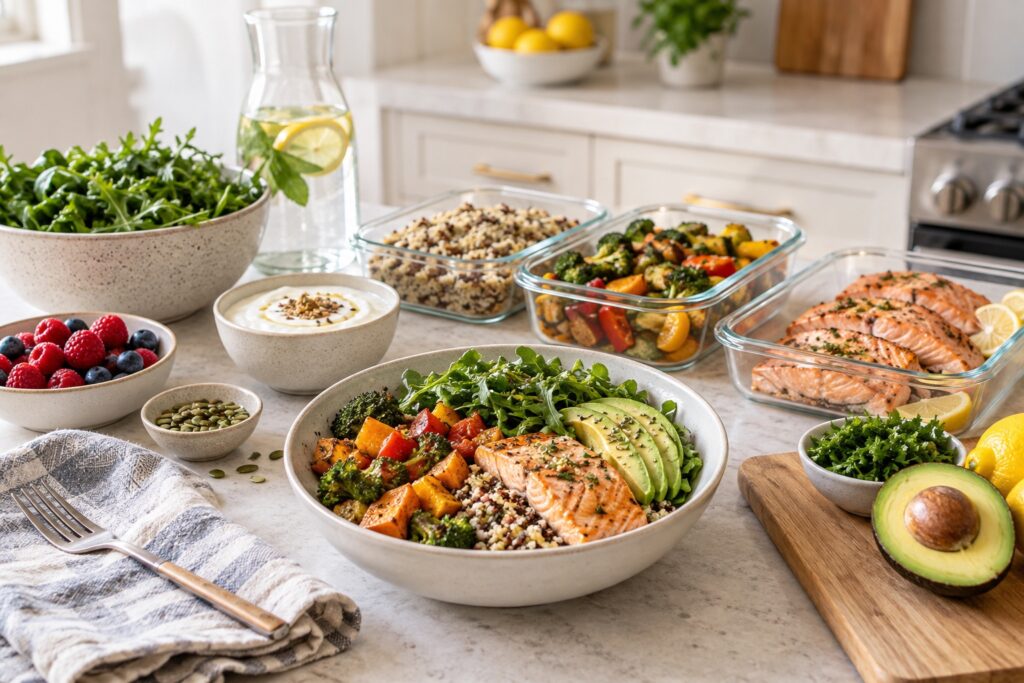
When possible, combine a protein source, carbohydrate, produce, and a satisfying fat. That might look like eggs with toast and fruit, beans with rice and vegetables, yogurt with oats and berries, or chicken with potatoes and salad. These are building blocks, not requirements for every plate.
Keep convenience in the plan
Frozen vegetables, canned beans, pre-cooked grains, bagged salads, nut or seed butters, and prepared soups can reduce the work of eating. Read labels according to your clinician’s guidance, and choose shortcuts that fit your budget and energy.
Take food safety seriously without becoming fearful
Pregnancy changes how the immune system responds to some foodborne germs. Follow current FDA guidance for selecting, storing, washing, separating, cooking, and chilling food. Use pasteurized products when recommended, cook foods to appropriate temperatures, and avoid cross-contamination between raw and ready-to-eat ingredients.
Ask specific questions
Instead of asking whether your diet is “good,” ask your clinician or registered dietitian about the concerns that actually affect you: severe nausea, vegetarian or vegan eating, food allergies, anemia, gestational diabetes, culturally important foods, disordered-eating history, or limited access to groceries.
Make room for appetite changes
Appetite can vary across pregnancy. A food you loved may suddenly be impossible; a simple meal may be the only thing that works. Keep communicating with your healthcare team, especially if you are losing weight, cannot keep food or fluids down, or feel worried about intake.
You do not have to eat perfectly to care for yourself. Consistent, accessible nourishment and professional guidance are a stronger foundation than rigid rules.
Source: FDA: Safe Eats—Food Safety for Moms-to-Be.
Editorial note: Nutrition needs vary. Seek personalized advice from a qualified healthcare professional or registered dietitian.